Balayage or highlights in Kharghar, and which one is yours
One is painted freehand, the other is placed in foil. The difference decides how it grows out, which matters more than how it looks on the day.
Book your visit- Published
- Reading
- 7 minutes
- Where
- Sector 20, Kharghar
- Open
- Seven days, 11.00
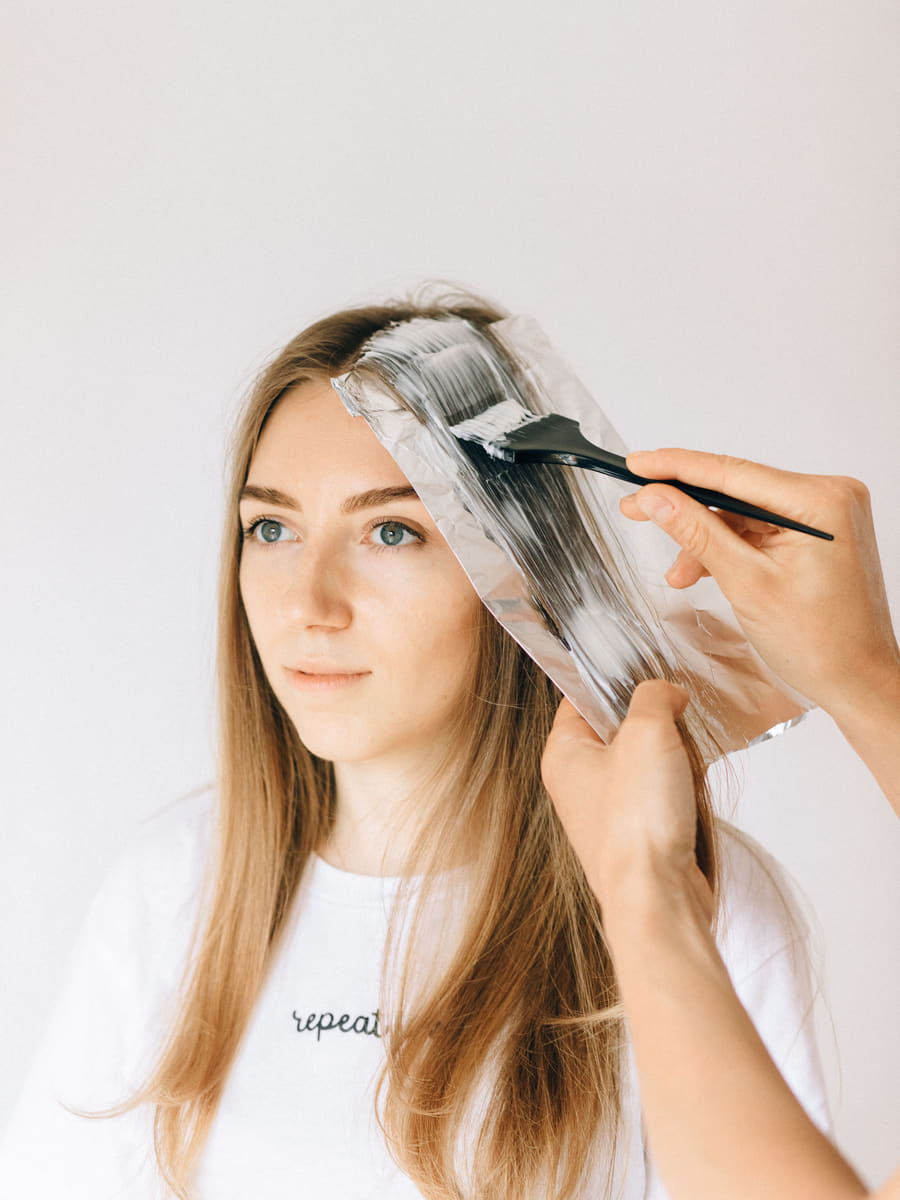
Two words arrive at the colour desk in Sector 20 most weeks, used as though they meant the same thing: balayage, and highlights.
They are not two shades, and they are not two tiers of the same service. They are two different ways of getting colour onto your hair. Which one you want depends less on how it looks the day you leave, and more on how it looks in the fourth month. That part rarely makes it into the photograph you brought.
The difference is the technique, not the shade
Balayage is painted on freehand. A section is taken, lightener is worked down the hair with a brush, and the hair is left open to the air. Nothing is wrapped.
Highlights are placed in foil. Fine strands are woven out of the section, packed against a sheet of foil, and folded shut. The closed packet holds heat and keeps the lightener working.
That single difference decides everything after it. Foil lifts further and more evenly, because a closed packet is a controlled one. Freehand painting lifts less, and lifts unevenly on purpose.
It explains the look, too. Foil gives defined lines of lighter hair, beginning wherever they were placed. Painting gives a soft gradient that is lightest at the ends and blurred everywhere else.
Neither technique is the more skilled one. They are answers to two different questions.
How each one grows out
This is the part that matters most, and the part most people learn about too late.
Foil highlights begin near the root, so the line they begin on travels downward as your hair grows. After eight to ten weeks a band of your own colour sits above it. It reads as regrowth because that is exactly what it is.
Balayage has no line to travel. The lightener was started below the root and blended as it went, so growth simply pushes a soft transition further down the hair.
So the upkeep differs in kind rather than in frequency. Foil asks to be topped up on a schedule. Painted colour asks to be refreshed when you want it brighter, which is a decision rather than a deadline.
If you book six weeks ahead without thinking about it, foil is no burden at all. If your diary is unpredictable, painted colour is far kinder to it.
Ombré, and where it sits between the two
Ombré is the third word people arrive with, and it belongs to a different category altogether.
Balayage and highlights describe how colour is applied. Ombré describes a result: dark at the root, light at the ends, with the change happening over a short stretch rather than a long one.
An ombré can be reached by painting freehand, and it can be reached with foil. The word tells a colourist what you want to end up with, not how to get there.
The practical difference is contrast. An ombré is a deliberate gradient over a shorter blend, so it is bolder and it announces itself. Balayage is usually asking to look like the sun did it.
Bring the photograph for the result you want. Let the room work out the method.
What each does to hair that has been coloured before
Most hair arriving at a Kharghar colour chair is not virgin hair. It has had a global colour, or a box tint, or highlights from two years ago still sitting through the mid-lengths.
Lightener does not remove artificial colour the way it lifts your own pigment. Old tint can go stubborn, patchy or warmer than expected, and it can do all three along a single strand.
Foil is the more forgiving of the two here. Every strand going into the packet has been chosen, so old colour can be left out of the weave entirely.
Painting freehand over an old colour line is harder, because the brush follows a surface that is not uniform. It can be done. It usually wants a strand test first, and sometimes it wants a second appointment.
The fear people bring to a colour chair is a fair one. It is that you will leave with something you did not ask for, and pay a lot for it. A colourist who says yes to everything on a first visit is not reading your hair.
The consultation exists for that reason. It carries no charge, and nothing is mixed before it has been agreed with you.
Which suits dark Indian hair, and the lift it needs
Most hair in Navi Mumbai sits at a deep base, and a deep base carries heavy warm pigment underneath. Lift one and the warmth surfaces first: red, then orange, then gold, in that order.
That is chemistry rather than a mistake. Reaching a cool, pale result means travelling through all of it and then toning whatever is left behind.
On dark hair, foil usually travels further in one sitting, because the packet holds the lightener at working temperature. Painting the same hair tends to settle in the warm bands rather than past them.
Which is why balayage on dark hair is often aimed at caramel, toffee or bronze rather than ash. Those shades sit close to where the hair naturally arrives, so they stay honest between appointments.
If you want genuinely pale ends on hair this dark, plan for more than one session. Anyone promising it in a single afternoon is about to over-process your hair, or about to disappoint you.
And the honest limit: if your hair is already fragile from earlier lightening or from repeated smoothing, neither technique is the right booking this month. A strand test settles that faster than an argument does.
Where to go next
Both techniques, and everything else the colour bar does, are on the hair colour page with real prices. If you are weighing up a salon in Kharghar for colour, the front page sets out how the consultation works before anything is mixed.
Questions
5 answered
What people ask before they book
What is the difference between balayage and highlights?
Balayage is painted on freehand and left open to the air. Highlights are woven into fine strands and wrapped in foil. Foil lifts further and leaves defined lines; painting lifts more gently and blurs the edges.
Which grows out better, balayage or highlights?
Balayage, in most cases. It begins below the root and blends, so growth pushes a soft transition further down. Foil highlights begin nearer the root, so a band of your own colour becomes visible after roughly eight to ten weeks.
Does balayage work on dark hair?
It does, though the shade you aim for matters. Most hair we colour in Kharghar holds warm pigment under a deep base, so painted colour tends to land at caramel, toffee or bronze rather than ash. Pale, cool ends are possible, but they usually take more than one session.
How often do highlights need topping up?
Roughly every eight to twelve weeks, depending on how quickly your hair grows and how much contrast you chose. Higher contrast shows regrowth sooner. A toner between appointments keeps the tone from drifting warm.
Can I have balayage over hair that is already coloured?
Often, though it wants a strand test first. Lightener behaves differently on artificial colour than on your own pigment, and an old tint can lift patchy or warm. Expect an honest answer about whether it takes one appointment or two.
The treatments this is about
More from the blog
Every treatment named here is on the carte, with its real price, on the services page. A quotation is given before anything is cut, mixed or applied.
Message us on WhatsApp